





The New Frontier of Digital Conflict
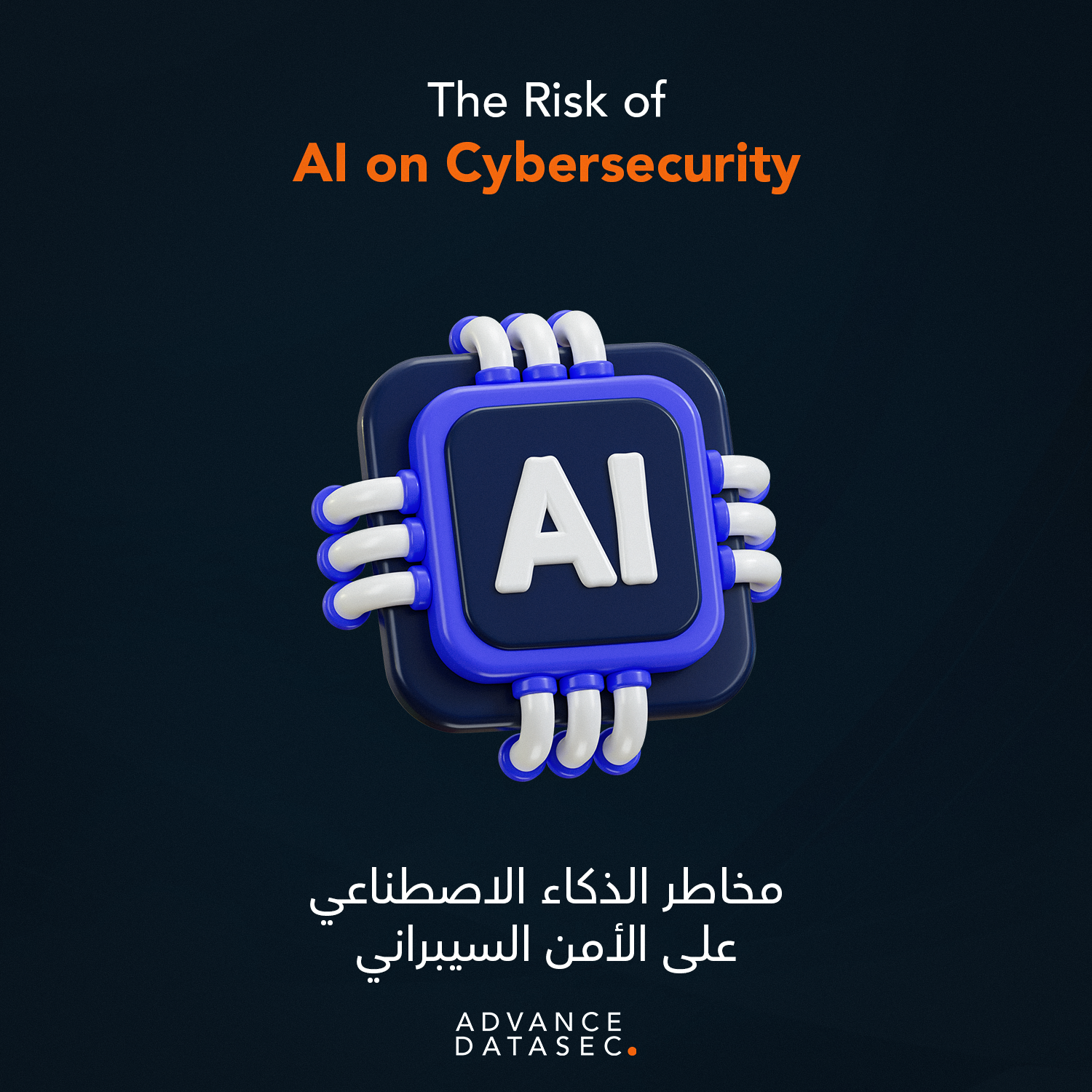
Artificial Intelligence (AI) has rapidly transformed the global technological landscape, promising unprecedented efficiencies and innovation. Yet, with this monumental progress comes a proportionate threat: the weaponization of AI by malicious actors. In the realm of digital security, AI is no longer just a tool for defense; it is becoming the ultimate accelerant for sophisticated cyber attacks. Understanding and addressing the risk of AI on our digital infrastructures is the most critical challenge facing Chief Information Security Officers (CISOs) and business leaders today.
This article delves into how AI is dramatically altering the cybersecurity threat landscape, moving beyond theoretical concerns to examine the tangible ways bad actors are leveraging these powerful technologies, and outlining the strategic defenses necessary to protect your enterprise.
AI: A Double-Edged Sword in the Digital Age
For years, cybersecurity firms have utilized AI and machine learning (ML) to process massive data streams, identify anomalous network behavior, and automate threat detection—a necessary evolution to keep pace with the scale of human-executed attacks. However, the same accessible, powerful algorithms that fuel defensive systems are now available to criminals, nation-states, and hacktivist groups, flipping the script on digital defense.
The core problem lies in AI’s capacity for speed, scale, and stealth. Traditional security measures designed to catch human-paced attacks are proving ineffective against threats orchestrated by intelligent automation.
How Malicious Actors are Weaponizing AI
The rise of AI has provided attackers with a suite of tools that automate, personalize, and accelerate every stage of the cyber kill chain, making the risk of AI exponentially greater than previous technological threats.
Automated Phishing and Social Engineering
Phishing attacks have historically relied on generic templates and poor grammar, making them relatively easy to spot. AI, particularly large language models (LLMs) and deepfakes, has changed this completely:
- Hyper-Personalization: AI can quickly scan vast amounts of public information (social media, corporate documents) to craft emails or messages that are highly personalized and contextually relevant, often mimicking the style and tone of a trusted colleague or superior. This massively increases the click-through rate.
- Voice and Video Deepfakes: Sophisticated AI tools can clone a CEO’s voice after analyzing just a few minutes of audio, enabling highly convincing “urgent” calls to finance departments for fraudulent transfers—a terrifying new evolution of social engineering.
Polymorphic Malware and Evasion Techniques
Traditional antivirus solutions rely on signature-based detection, searching for known malware characteristics. AI-driven malware is designed to continuously evolve, making signature detection obsolete:
- Polymorphic and Metamorphic Code: AI can generate millions of unique, constantly changing variants of malicious code. These ‘polymorphic’ programs alter their structure to bypass detection without changing their core function, essentially hiding in plain sight.
- Adaptive Reconnaissance: AI bots can learn the defender’s detection patterns, adapting their attack vectors and timing in real-time to exploit brief windows of opportunity or avoid systems under high scrutiny.
Accelerated Zero-Day Discovery
One of the most concerning aspects of the risk of AI in cyber warfare is its ability to accelerate vulnerability research. Machine learning models are being trained on massive codebases to automatically identify logical flaws, coding errors, and complex zero-day vulnerabilities in critical software platforms—vulnerabilities that would take human researchers months or years to find. By automating the discovery process, attackers gain a significant time advantage, leading to more potent and widespread attacks with minimal warning.
The Evolving Threat Landscape: Specific AI Risks
The application of AI expands the attack surface in several specific and dangerous ways:
- Supply Chain Contamination: AI can be used to inject sophisticated, hard-to-detect backdoors into legitimate open-source software packages or widely used development libraries, compromising thousands of organizations simultaneously.
- Distributed Denial-of-Service (DDoS) 2.0: AI-powered bots can coordinate massive, geographically distributed attacks that are far more difficult to block. They can mimic legitimate user traffic patterns, making it challenging for standard filters to differentiate between real users and malicious actors.
- Model Poisoning: The AI models used for defense are themselves targets. Attackers can strategically inject corrupted data into a defensive AI system’s training set, causing the model to misclassify malicious activity as benign, creating a massive, undetectable blind spot for the organization. This represents a subtle but powerful facet of the risk of AI manipulation.
Defending the Future: Countermeasures and AI-Powered Defense
While the risk of AI is undeniable, the solution is not to abandon the technology, but to meet fire with fire. Effective defense requires a commitment to superior, AI-augmented security architecture.
Leveraging AI for Superior Threat Detection
Security teams must prioritize the deployment of AI tools that can keep pace with AI-driven attacks:
- Behavioral Analysis: Defense systems must move beyond signature detection to behavioral AI, which establishes a baseline of “normal” user and network activity. Any deviation—such as a user accessing unusual files or an increase in unauthorized outbound connections—triggers an immediate alert, catching polymorphic malware and zero-day exploits before they execute their final payload.
- Security Orchestration, Automation, and Response (SOAR): AI-driven SOAR platforms are essential for rapidly triaging and responding to incidents. By automating repetitive tasks, they allow human analysts to focus on complex, strategic problems, reducing the time from detection to containment from hours to mere minutes.
The Importance of a Proactive Security Posture
In the face of AI-accelerated threats, a passive, reactive security posture is a guaranteed path to compromise. Defense strategies must become proactively aggressive. This means:
- Continuous Validation: Regular, aggressive stress-testing of all security controls.
- Zero Trust Architecture: Adopting a framework where no user, device, or application is inherently trusted, requiring continuous verification before granting access to resources.
- Advanced Training: Ensuring security teams are trained on new AI-specific threats, including deepfake detection, model integrity monitoring, and AI-driven attack simulations.
Strategic Pillars for Mitigating AI-Driven Threats
Managing the risk of AI requires a holistic, multi-layered strategy that addresses technology, policy, and personnel.
GRC and Policy Updates
Governance, Risk, and Compliance (GRC) frameworks must be updated to account for AI’s unique challenges. This includes establishing clear policies for data provenance, ensuring that AI systems used for defense are transparent and auditable, and adhering to regional compliance mandates, such as those set by regulatory bodies like NCA ECC, NCA CCC, and SAMA CSF in Saudi Arabia. This ensures that the use of AI in security aligns with legal and ethical standards while providing maximum protection.
Employee Training and Awareness
Since social engineering remains a primary attack vector, human vulnerability is a major factor. Comprehensive cybersecurity training, including customized workshops and simulated phishing campaigns, is crucial. Employees must be educated on the latest AI-driven social engineering tactics, such as recognizing sophisticated deepfakes and context-aware phishing attempts.
Continuous Security Testing
Offensive Security is no longer optional—it is mandatory. Organizations must continuously simulate real-world attacks to identify and patch vulnerabilities before AI-powered adversaries find them. This includes:
- Web Application and Network Penetration Testing: Identifying flaws in critical infrastructure.
- Source Code Review: Auditing proprietary code for AI-exploitable logic errors.
- Vulnerability Management: Systematically tracking, prioritizing, and mitigating identified weaknesses.
By partnering with experts in Offensive Security, companies ensure they are always one step ahead. Successfully mitigating the risk of AI is achievable, but only with continuous vigilance and expert support.
Conclusion: The Path Forward is Intelligence-Driven
The emergence of AI as a weapon marks a pivotal moment in cybersecurity. It accelerates threats, complicates detection, and demands a fundamental shift in how organizations prioritize and execute their defense strategies. The battle is no longer human versus human, but human-augmented-by-AI versus human-augmented-by-AI.
To survive and thrive in this new landscape, businesses must commit to a proactive, layered defense, driven by cutting-edge security technologies and guided by experienced cybersecurity consultants. The time for deliberation is over; the time for decisive action is now.
Is your organization equipped to handle this new generation of AI-accelerated threats? Don’t let uncertainty expose your critical assets. Contact Advance Datasec today for a comprehensive assessment of your security posture and explore our range of Defensive Security, GRC, and Offensive Security services. Advance Datasec is dedicated to protecting your assets and ensuring business continuity in the face of the most advanced cyber challenges.

For more Articles: