

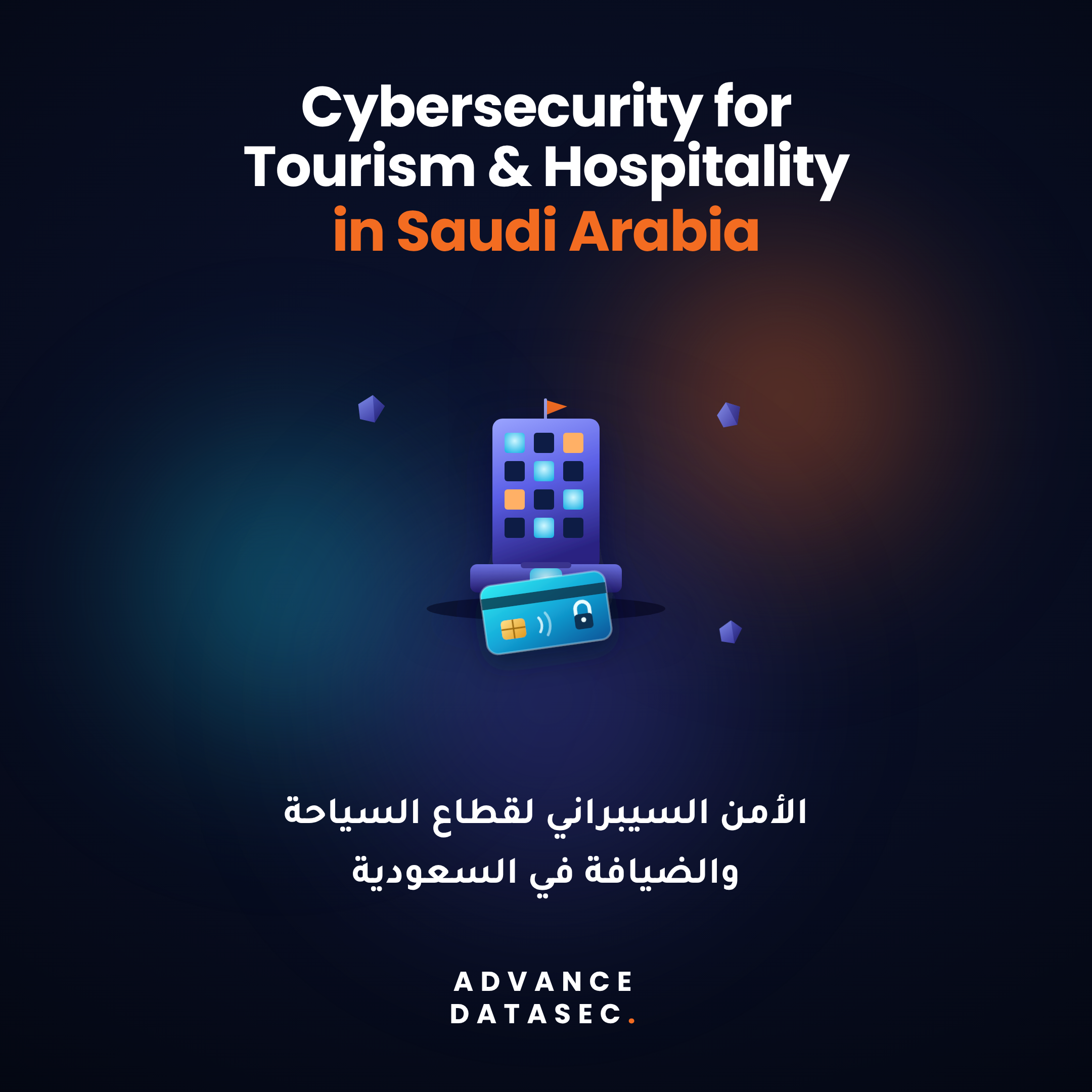
Saudi Arabia’s tourism and hospitality sector is expanding rapidly, supported by new destinations, hotels, resorts, entertainment venues, travel platforms, and major international events. Digital technology is central to this growth, helping organizations manage reservations, personalize guest experiences, process payments, operate smart facilities, and deliver connected services.
However, every digital interaction can also create cybersecurity and privacy risks. Hotels, resorts, travel companies, booking platforms, and tourism operators process valuable personal and financial information while depending on interconnected systems that must remain continuously available.
For organizations evaluating cybersecurity tourism hospitality KSA requirements, the priority is clear: protect guest data, secure digital services, maintain operational continuity, and preserve the trust that defines a successful hospitality experience.
Why Cybersecurity Matters in Tourism and Hospitality
Hospitality organizations manage a wide range of sensitive information, including:
- Guest names and contact details
- Identification and travel information
- Reservation and stay history
- Payment information
- Loyalty program accounts
- Guest preferences and special requests
- Employee and supplier records
- Security and access information
They also depend on digital systems for reservations, check-in, payments, room access, property management, communications, and facility operations.
A successful cyberattack can therefore affect both guest information and the physical delivery of services. It may lead to:
- Exposure of personal or financial data
- Interrupted reservations and check-in processes
- Payment system outages
- Compromised guest accounts
- Loss of access to rooms or operational systems
- Ransomware and business disruption
- Regulatory consequences
- Financial losses
- Reputational damage
- Reduced guest trust
Cybersecurity for tourism and hospitality in KSA should be treated as part of guest safety, service quality, and business continuity rather than as a purely technical responsibility.
Digital Transformation in Saudi Hospitality
The modern hospitality experience is increasingly digital. Guests may discover a destination online, reserve through an application, complete mobile check-in, use a digital room key, connect to hotel wireless networks, order services through a tablet, and receive personalized offers after their stay.
Hotels and tourism companies may use:
- Online booking engines
- Property management systems
- Customer relationship management platforms
- Payment terminals
- Mobile applications
- Loyalty platforms
- Cloud services
- Smart room technologies
- Connected locks and access systems
- Building management systems
- Guest wireless networks
- Digital concierge services
- Artificial intelligence and data analytics
These technologies can improve convenience and operational efficiency, but they also connect systems that were previously separate. A weakness in one application, device, supplier, or user account can create a path to sensitive information or critical services.
Cybersecurity must therefore be integrated into every stage of digital transformation, from system design and procurement to deployment, operation, and retirement.
Major Cybersecurity Challenges in Tourism and Hospitality
1. High Volumes of Valuable Guest Data
Hotels, resorts, airlines, travel agencies, and booking platforms process large volumes of personal information. Some information may be retained across reservation systems, loyalty platforms, marketing tools, customer service applications, and third-party environments.
Attackers may target this information for financial fraud, identity theft, account takeover, phishing, or resale.
Organizations should understand:
- What guest information they collect
- Why they need it
- Where it is stored
- Who can access it
- Which suppliers process it
- How long it is retained
- How it is securely deleted
Collecting unnecessary information or keeping it indefinitely increases the potential impact of a breach.
2. Payment System Security
Hospitality businesses process payments through websites, booking applications, reception desks, restaurants, spas, retail outlets, and entertainment venues.
These multiple payment points create opportunities for attackers to steal card information or redirect transactions.
Payment security requires:
- Segmentation of payment environments
- Secure payment terminals
- Strong access controls
- Encryption
- Regular security updates
- Monitoring for suspicious activity
- Secure application development
- Compliance with applicable payment security requirements
Hospitality organizations should also monitor for attempts to replace payment instructions, manipulate invoices, or impersonate suppliers.
3. Ransomware and Operational Disruption
Ransomware can disable reservation platforms, property management systems, staff devices, payment services, communication tools, and other essential functions.
A hotel may still have rooms and employees available but become unable to confirm bookings, issue room access, process payments, or retrieve guest information.
Organizations should prepare manual procedures for essential operations while technical teams contain the incident and restore systems.
Effective ransomware protection includes:
- Endpoint security
- Email protection
- Multi-factor authentication
- Network segmentation
- Vulnerability management
- Privileged access controls
- Protected backups
- Incident response exercises
4. Phishing and Social Engineering
Hospitality employees regularly receive booking requests, supplier invoices, event inquiries, guest attachments, and requests for account changes. Attackers can imitate these normal interactions to steal credentials, deliver malware, or redirect payments.
Front-desk teams may also face telephone-based social engineering from individuals pretending to be guests, executives, suppliers, or technical support personnel.
Cybersecurity awareness should be tailored to specific roles, including:
- Front-desk employees
- Reservation teams
- Finance and procurement personnel
- Sales and event teams
- System administrators
- Senior management
- Temporary and seasonal employees
Training should be reinforced through practical exercises and phishing simulations.
5. Third-Party and Supply Chain Risks
Tourism and hospitality organizations rely on many external partners, including:
- Online travel agencies
- Booking platform providers
- Payment processors
- Property management system vendors
- Marketing platforms
- Maintenance companies
- Travel operators
- Technology support providers
- Cloud service providers
- Connected device manufacturers
A supplier may process guest information or have remote access to critical systems. A security weakness at that supplier can therefore affect the hospitality organization.
Third-party cybersecurity should be managed from selection through termination. Contracts should define security expectations, access limitations, data handling requirements, incident notification obligations, and the secure deletion or return of information.
6. Guest Wireless Network Risks
Guests expect fast and convenient wireless connectivity, but poorly designed networks may create risks for both guests and the organization.
Guest networks should be separated from corporate systems, payment environments, building systems, and operational technologies.
Organizations should apply secure configurations, monitor suspicious activity, limit unnecessary communications between connected devices, and ensure that guest access cannot be used to reach internal systems.
7. Smart Rooms and Connected Devices
Modern hotels may use connected televisions, lighting, thermostats, voice-controlled devices, digital room keys, cameras, sensors, and smart appliances.
These technologies can improve convenience and energy efficiency, but insecure devices may introduce weak passwords, outdated software, exposed services, or insufficient encryption.
Connected devices should be:
- Approved before deployment
- Configured securely
- Isolated from critical networks
- Monitored continuously
- Updated when security patches are available
- Removed or replaced when no longer supported
The organization should also verify what information each device collects and where that information is transmitted.
8. Digital Room Keys and Access Systems
Digital keys and connected access systems can improve the guest experience, but they must be protected against account takeover, unauthorized duplication, insecure communication, and administrative misuse.
Access systems should use strong authentication, encrypted communications, secure administrative accounts, detailed activity logs, and reliable emergency procedures.
Physical security and cybersecurity teams should coordinate because a cyber weakness in an access system may create a physical safety risk.
9. Cloud Security and Misconfiguration
Hospitality organizations increasingly rely on cloud-based booking, property management, customer relationship management, collaboration, and marketing systems.
Moving a system to the cloud does not remove the organization’s security responsibilities. Incorrect permissions, exposed storage, weak identities, or insufficient monitoring may place guest information at risk.
Cloud security should include:
- Strong identity and access management
- Multi-factor authentication
- Secure configuration standards
- Encryption and key management
- Logging and continuous monitoring
- Regular access reviews
- Backup and recovery procedures
- Supplier security assessments
Applicable Saudi requirements should also be considered when selecting and using cloud services.
10. Legacy Hospitality Systems
Some hotels operate older property management, payment, access, or building systems that are difficult to update or replace.
Legacy systems may use unsupported software, weak encryption, or shared accounts. They may also depend on custom integrations that make replacement more complicated.
Until modernization is possible, organizations should reduce risk through network isolation, restricted access, enhanced monitoring, application controls, and documented compensating measures.
Protecting Guest Data Under Saudi Requirements
Hospitality and tourism organizations in the Kingdom process significant amounts of personal data and should evaluate their responsibilities under Saudi Arabia’s Personal Data Protection Law and its implementing regulations.
A structured privacy and data protection program should address:
- Lawful and transparent data processing
- Clear purposes for collecting information
- Data minimization
- Appropriate retention periods
- Protection of data confidentiality
- Management of data subject requests
- Supplier and processor responsibilities
- Secure data transfers
- Personal data breach procedures
- Secure deletion and disposal
Privacy compliance and cybersecurity are closely connected. Privacy policies cannot protect guest information unless they are supported by effective technical and organizational controls.
Depending on an organization’s classification, services, and use of technology, relevant cybersecurity requirements or guidance issued by the National Cybersecurity Authority may also need to be considered. Each organization should determine which controls apply to its specific environment rather than assuming that every framework is mandatory.
Practical Cybersecurity Solutions for Hospitality Organizations
Establish Clear Cybersecurity Governance
Cybersecurity responsibilities should be clearly assigned across leadership, technology, operations, finance, legal, privacy, human resources, and physical security teams.
The governance structure should include:
- Approved security policies
- Defined risk ownership
- Asset and data classification
- Regular risk assessments
- Incident escalation procedures
- Supplier security requirements
- Performance and risk indicators
- Executive reporting
Cybersecurity risks should be explained in terms of their potential effect on guests, services, revenue, reputation, and regulatory obligations.
Build an Accurate Technology Inventory
Organizations should maintain an updated inventory of:
- Servers and employee devices
- Cloud applications
- Booking and property management systems
- Payment terminals
- Mobile applications
- Wireless networks
- Connected room devices
- Access control systems
- Databases
- Third-party connections
Each asset should have an identified owner, business purpose, criticality level, software version, and lifecycle status.
Strengthen Identity and Access Management
Employee, administrator, supplier, and service accounts should follow the principle of least privilege.
Organizations should implement:
- Multi-factor authentication
- Role-based access
- Privileged access management
- Regular access reviews
- Separation of duties
- Immediate removal of unnecessary accounts
- Monitoring of administrative activity
- Time-limited supplier access
Shared accounts should be minimized because they reduce accountability and make investigations more difficult.
Segment Networks
Guest wireless networks, employee systems, payment environments, smart devices, building systems, and critical servers should be separated according to their risk.
Communication between network zones should be limited to approved services and monitored for suspicious activity.
Segmentation can reduce the likelihood that a compromise of one device will spread across the organization.
Protect Booking Platforms and Applications
Online booking engines, mobile applications, guest portals, and interfaces should be tested regularly for security weaknesses.
Secure development should include:
- Secure coding practices
- Application security testing
- Interface testing
- Strong authentication
- Dependency management
- Protection against automated attacks
- Secure session management
- Continuous vulnerability monitoring
Changes to public-facing systems should be reviewed and tested before release.
Monitor Systems and Detect Threats
Hospitality organizations need visibility across endpoints, networks, cloud platforms, applications, identities, and sensitive data.
Centralized monitoring can help identify:
- Unusual account activity
- Unauthorized access
- Suspicious network traffic
- Malware
- Changes to critical systems
- Data leakage
- Abnormal payment activity
Alerts must be supported by trained personnel and documented response procedures.
Implement Risk-Based Vulnerability Management
Security updates and vulnerabilities should be prioritized according to:
- Asset criticality
- Internet exposure
- Availability of an exploit
- Sensitivity of stored information
- Potential effect on guest services
- Existing security controls
Vulnerability assessments and penetration testing can help identify weaknesses before attackers exploit them.
Prepare for Incidents and Service Disruption
Incident response plans should cover scenarios such as:
- Guest data breaches
- Ransomware
- Payment system compromise
- Booking platform outages
- Compromised employee accounts
- Unauthorized access to smart devices
- Supplier-related incidents
Plans should define technical containment, guest communication, management escalation, legal review, regulatory notification, and service recovery responsibilities.
Hotels should also maintain practical manual procedures for reservations, check-in, payments, and room access when key systems are unavailable.
Protect and Test Backups
Critical data and system configurations should be backed up according to defined recovery requirements.
Backups should be:
- Isolated from production systems
- Protected against unauthorized changes
- Encrypted where appropriate
- Monitored for successful completion
- Tested regularly
- Accessible during emergency recovery
The organization should verify that critical services can be restored in the correct sequence and within acceptable timeframes.
A Cybersecurity Roadmap for Tourism and Hospitality
Organizations can structure their improvement programs around five stages:
- Identify: Document critical services, systems, guest data, suppliers, and regulatory obligations.
- Assess: Evaluate technical weaknesses, privacy risks, cloud configurations, third-party exposure, and incident readiness.
- Prioritize: Rank risks according to their potential impact on guests, operations, revenue, safety, and reputation.
- Implement: Apply suitable governance, technical controls, processes, and employee training.
- Validate and improve: Test security controls, conduct exercises, review incidents, and update the program continuously.
This approach helps hospitality organizations build practical resilience without disrupting the guest experience.
How Advance DataSec Supports Tourism and Hospitality Organizations
Advance DataSec helps hotels, resorts, travel companies, tourism operators, and digital booking platforms protect guest data and maintain secure, reliable services.
Our capabilities include:
- Vulnerability assessment and penetration testing
- Red team assessments
- Cybersecurity governance, risk, and compliance
- Privacy and cybersecurity gap assessments
- Cloud security assessments
- Application and interface security testing
- Security architecture and configuration reviews
- Identity and privileged access management
- Endpoint, network, email, and data protection
- Security information and event management solutions
- Incident response readiness
- Cybersecurity awareness and phishing simulations
Our approach focuses on practical risk reduction, secure guest experiences, regulatory alignment, and operational continuity.
Conclusion
As Saudi Arabia’s tourism and hospitality sector grows, digital technology will continue to shape how guests discover, book, access, and experience destinations and services.
The same technology also introduces risks involving personal data, payments, reservations, cloud platforms, connected devices, suppliers, and operational systems.
Protecting these environments requires strong governance, secure identities, network segmentation, continuous monitoring, protected data, tested applications, employee awareness, and effective incident response.
A mature approach to cybersecurity for tourism and hospitality in KSA protects more than systems. It protects guests, services, revenue, reputation, and the trust that hospitality businesses depend on.
Frequently Asked Questions
Why is cybersecurity important for hotels and tourism companies?
These organizations process valuable personal and payment information while relying on digital systems for reservations, check-in, room access, payments, and guest services. A cyber incident can affect both data privacy and daily operations.
What are the main cybersecurity threats facing hotels?
Common threats include ransomware, phishing, payment system compromise, guest data breaches, insecure wireless networks, cloud misconfiguration, vulnerable connected devices, and third-party compromise.
How can hotels protect guest data?
Hotels should classify guest information, limit access, use encryption, monitor sensitive activity, secure cloud environments, manage retention periods, assess suppliers, and maintain tested incident response procedures.
Are smart hotel rooms a cybersecurity risk?
They can create risks if connected devices use weak credentials, outdated software, insecure communication, or poor network separation. Devices should be securely configured, isolated, monitored, updated, and removed when no longer supported.
How often should hospitality organizations conduct penetration testing?
Testing should be performed periodically and after significant system changes, new applications, major integrations, cloud migrations, acquisitions, or cybersecurity incidents. The frequency should reflect the organization’s risks and applicable obligations.