

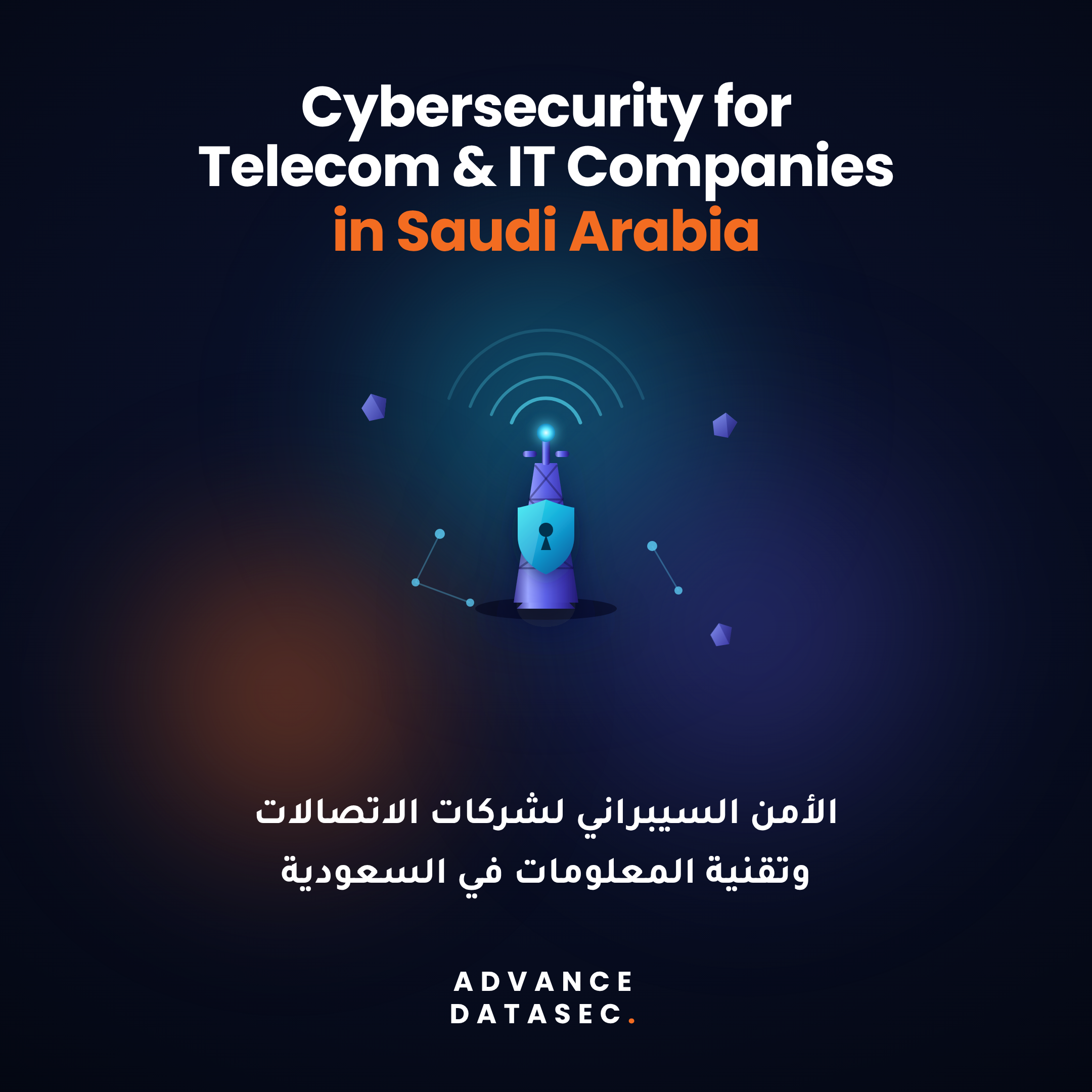
Telecommunications and information technology companies form the foundation of Saudi Arabia’s increasingly connected economy. They provide the networks, cloud platforms, data centers, digital services, and technical infrastructure that support government entities, businesses, and individuals across the Kingdom.
As Saudi Arabia continues to expand its digital capabilities, telecom and technology companies are managing larger networks, growing volumes of customer data, more connected devices, and increasingly complex relationships with suppliers and service providers.
For organizations evaluating cybersecurity telecom IT Saudi requirements, cybersecurity is not simply a technical responsibility. It is essential for protecting critical infrastructure, maintaining service availability, preserving customer trust, meeting regulatory obligations, and supporting the Kingdom’s digital transformation.
Why Cybersecurity Matters to Saudi Telecom and IT Companies
Telecom and technology providers occupy a unique position in the digital ecosystem. A cyber incident affecting a major provider may not remain limited to that company. It can interrupt services for customers, businesses, government entities, and other critical sectors that depend on its infrastructure.
A successful attack could result in:
- Network or service outages
- Unauthorized access to customer information
- Disruption of cloud or data center services
- Compromise of customer accounts
- Financial and operational losses
- Regulatory consequences
- Loss of customer confidence
- Threats to national infrastructure
- Further attacks against connected customers
Cybersecurity telecom IT Saudi programs must therefore protect more than internal systems. They must also protect the wider digital services and organizations that rely on them.
The Expanding Digital Environment in Saudi Arabia
Saudi Arabia’s digital economy continues to expand through cloud computing, fifth-generation mobile networks, artificial intelligence, the Internet of Things, data centers, smart infrastructure, digital platforms, and advanced communication services.
These technologies create substantial opportunities for innovation and growth, but they also expand the potential attack surface.
Telecom and IT companies may need to secure:
- Core and access networks
- Customer-facing platforms
- Cloud infrastructure
- Data centers
- Billing and customer management systems
- Mobile applications
- Application programming interfaces
- Internet of Things platforms
- Employee and contractor devices
- Software development environments
- Third-party connections
- Remote administration systems
Security must be integrated throughout the design, deployment, operation, maintenance, and retirement of these services.
Major Cybersecurity Challenges in the Telecom and IT Sector
1. Large and Complex Attack Surfaces
Telecom and technology companies operate extensive environments containing physical infrastructure, software platforms, cloud services, network equipment, customer portals, interfaces, databases, and remote sites.
The scale and complexity of these environments make it difficult to maintain complete asset visibility and consistent security configurations.
A forgotten server, unmanaged application, exposed interface, or outdated network device may provide attackers with a path into the organization.
Companies need accurate inventories that identify each asset’s owner, purpose, location, configuration, exposure, criticality, and lifecycle status.
2. Threats to Network Availability
Telecom services must remain continuously available. Service interruptions can affect communications, business operations, online services, and access to essential digital platforms.
Attackers may attempt to disrupt availability through:
- Distributed denial-of-service attacks
- Malware
- Ransomware
- Network configuration changes
- Exploitation of infrastructure vulnerabilities
- Compromise of administrative accounts
- Physical or environmental disruption
Organizations need resilient architectures, redundant infrastructure, traffic protection, secure configuration management, tested recovery procedures, and real-time monitoring.
Cybersecurity and service continuity should be managed together rather than as separate priorities.
3. Ransomware and Destructive Attacks
Ransomware can interrupt billing systems, customer support platforms, employee devices, administrative services, and technical operations.
Even when attackers do not directly affect core network infrastructure, losing access to supporting systems may still disrupt service delivery and delay recovery.
Telecom and IT companies should strengthen their defenses through:
- Endpoint protection
- Network segmentation
- Email security
- Multi-factor authentication
- Vulnerability management
- Protected backups
- Privileged access controls
- Incident response exercises
Organizations should also prepare for destructive attacks in which the attacker’s objective is disruption rather than financial payment.
4. Customer Data and Privacy Risks
Telecom and IT companies process significant volumes of personal, commercial, technical, billing, and usage information.
If this information is improperly accessed, shared, stored, or retained, the company may face regulatory consequences, financial losses, and reputational damage.
Data protection should include:
- Data discovery and classification
- Strong access controls
- Encryption
- Secure data sharing
- Data loss prevention
- Retention and deletion policies
- Monitoring of sensitive data activity
- Regular access reviews
- Incident notification procedures
Companies should understand what information they hold, where it is stored, how it moves, who can access it, and when it should be securely deleted.
5. Cloud Security and Misconfiguration
Cloud platforms are central to modern telecom and IT services. However, insecure configurations, excessive permissions, exposed storage, weak interfaces, or insufficient logging can create serious vulnerabilities.
Security responsibilities must be clearly divided between cloud service providers and cloud customers.
Cloud environments should be protected through:
- Secure architecture and configuration standards
- Identity and access management
- Encryption and key management
- Continuous configuration monitoring
- Workload protection
- Security logging
- Vulnerability management
- Incident response procedures
- Backup and recovery testing
Cloud security should be integrated into daily operations rather than treated as a one-time review before deployment.
6. Identity and Privileged Access
Telecom and technology environments often require administrators, engineers, developers, support teams, vendors, and contractors to access sensitive systems.
Compromising a privileged account can give an attacker extensive control over networks, cloud platforms, customer databases, or technical services.
Organizations should apply:
- Multi-factor authentication
- Privileged access management
- Least-privilege principles
- Role-based access
- Time-limited administrative permissions
- Separation of duties
- Session monitoring and recording
- Regular access certification
- Immediate removal of unnecessary accounts
Shared administrative accounts should be minimized because they reduce accountability and make suspicious activity more difficult to investigate.
7. Supply Chain and Third-Party Risks
Telecom and IT companies rely on hardware manufacturers, software developers, system integrators, cloud providers, contractors, and managed service providers.
A weakness in any of these relationships can affect the security of the company and its customers. In the context of cybersecurity telecom IT Saudi environments, supply chain exposure is particularly significant given the scale of international technology partnerships supporting the Kingdom’s infrastructure.
Third-party cybersecurity programs should address:
- Security assessments before contracting
- Cybersecurity requirements in contracts
- Software and hardware integrity
- Access restrictions
- Subcontractor oversight
- Incident reporting
- Continuous monitoring
- Periodic reassessment
- Secure termination of access
High-risk suppliers should be assessed according to the services they provide, the information they process, and the level of access they receive.
8. Application and Interface Security
Telecom and IT companies operate customer portals, mobile applications, partner platforms, internal systems, and application programming interfaces.
Weak authentication, insecure code, exposed interfaces, or vulnerable third-party components may allow attackers to access information or manipulate services.
Security should be built into the software development lifecycle through:
- Secure coding standards
- Threat modeling
- Code analysis
- Application security testing
- Interface security testing
- Dependency management
- Secrets management
- Change control
- Pre-deployment reviews
- Continuous vulnerability monitoring
Public-facing systems should also be protected against automated attacks, account takeover, credential stuffing, and abuse of legitimate functionality.
9. Internet of Things and Connected Devices
The expansion of connected devices creates additional opportunities for telecom and technology providers, but it also introduces new security challenges.
Connected devices may use weak credentials, outdated software, insecure protocols, or insufficient update mechanisms. A compromised device can become an entry point into a wider environment or part of a large-scale automated attack.
Companies should establish requirements for device identity, secure configuration, encryption, software updates, lifecycle management, network isolation, and continuous monitoring.
10. Insider Threats and Human Error
Not every security incident begins with an external attacker. Employees, contractors, or suppliers may expose information or systems through mistakes, negligence, misuse of privileges, or malicious actions.
Organizations should combine technical and administrative controls, including:
- Separation of duties
- Access monitoring
- Data loss prevention
- Behavioral analysis
- Background screening where appropriate
- Clear security policies
- Role-based awareness training
- Secure reporting channels
Employees should understand how to recognize phishing, social engineering, unusual access requests, and attempts to bypass normal procedures.
11. Shortage of Specialized Cybersecurity Skills
Telecom and IT environments require expertise in network security, cloud security, application security, identity protection, incident response, digital forensics, compliance, and threat detection.
Organizations may find it difficult to recruit and retain specialists across every required discipline.
A sustainable approach may combine internal teams, workforce development, security automation, managed capabilities, and support from qualified cybersecurity specialists.
Cybersecurity Regulations for Telecom and IT Companies in Saudi Arabia
The Communications, Space and Technology Commission has established a Cybersecurity Regulatory Framework for service providers in the telecommunications and information technology sector. Its objective is to increase cybersecurity maturity and strengthen the security and resilience of sector infrastructure and services.
Depending on their activities, service providers may also need to consider other sector-specific requirements relating to telecommunications, cloud services, data centers, user protection, personal data, and quality of service.
The National Cybersecurity Authority has also issued controls and frameworks that may apply according to an organization’s classification and scope, including:
- Essential Cybersecurity Controls
- Critical Systems Cybersecurity Controls
- Cloud Cybersecurity Controls
- Data Cybersecurity Controls
- Operational Technology Cybersecurity Controls
Organizations should determine their specific obligations based on their licenses, services, systems, customers, and regulatory classification.
Compliance should be treated as a continuous program. A company may satisfy an assessment at one point but become exposed later because of new systems, configuration changes, acquisitions, suppliers, or emerging threats.
Practical Solutions for Strengthening Cybersecurity
Establish Strong Cybersecurity Governance
Senior leadership should define cybersecurity responsibilities, risk tolerance, reporting mechanisms, and accountability.
A strong governance structure should include:
- Approved security policies and standards
- Clearly assigned control owners
- Regular risk assessments
- Performance and risk indicators
- Exception management
- Executive reporting
- Independent assurance
- Continuous regulatory monitoring
Cybersecurity risks should be explained in terms of their potential impact on services, customers, revenue, reputation, and regulatory obligations.
Maintain Complete Asset Visibility
Organizations should maintain a continuously updated inventory of hardware, software, cloud services, network devices, interfaces, databases, and third-party connections.
Assets should be classified based on their criticality, exposure, business function, information sensitivity, and recovery requirements.
Automated discovery can support this process, but identified assets must still have clear ownership and lifecycle management.
Segment Critical Networks
Network segmentation can prevent a compromise in one area from spreading across the organization.
Critical infrastructure, corporate systems, development environments, customer platforms, and third-party connections should be separated according to risk.
Communication between zones should be limited to approved pathways and monitored for suspicious behavior.
Strengthen Detection and Response
Continuous monitoring should combine information from:
- Network infrastructure
- Endpoints and servers
- Cloud environments
- Identity systems
- Customer-facing applications
- Email platforms
- Databases
- Security tools
Security teams should establish normal patterns of activity and investigate unusual behavior, unauthorized changes, abnormal traffic, and suspicious access attempts.
Detection capabilities should be supported by clear response procedures and trained personnel.
Implement Risk-Based Vulnerability Management
Vulnerabilities should be prioritized according to actual risk rather than severity scores alone.
Factors should include:
- Asset criticality
- Internet exposure
- Availability of an exploit
- Sensitivity of affected information
- Potential service impact
- Existing security controls
- Regulatory significance
Penetration testing and red team exercises can help organizations understand how weaknesses may be combined in realistic attacks.
Protect Against Service Disruption
Companies should design services to remain available during technical failures and cyber incidents.
This includes:
- Redundant infrastructure
- Distributed denial-of-service protection
- Secure configuration management
- Isolated and tested backups
- Defined recovery objectives
- Alternative communication procedures
- Business continuity planning
- Regular recovery exercises
The organization should know which services must be restored first and which dependencies are required for recovery.
Secure the Development Lifecycle
Developers and security teams should collaborate from the earliest stages of system design.
Security requirements, threat modeling, code reviews, automated testing, interface testing, and dependency analysis should be incorporated into development processes.
Serious vulnerabilities should be addressed before production release, and deployed systems should remain continuously monitored.
Prepare for Major Cyber Incidents
Incident response plans should cover scenarios such as:
- Network outages
- Ransomware
- Customer data breaches
- Compromised privileged accounts
- Cloud platform compromise
- Distributed denial-of-service attacks
- Supply chain incidents
- Insider threats
Plans should define technical, operational, legal, regulatory, and communication responsibilities.
Tabletop exercises and technical simulations can verify that teams are prepared to respond under pressure.
A Cybersecurity Roadmap for Telecom and IT Companies
Organizations can structure their improvement programs around five stages:
- Identify: Understand critical infrastructure, services, information, dependencies, and regulatory requirements.
- Assess: Evaluate technical vulnerabilities, control maturity, cloud security, supplier risks, and incident readiness.
- Prioritize: Rank risks based on their potential impact on service availability, customers, data, and regulatory obligations.
- Implement: Deploy appropriate governance, processes, technologies, and workforce capabilities.
- Validate and improve: Test controls, measure effectiveness, review incidents, and continuously adjust the program.
This approach enables organizations to build measurable resilience rather than rely on disconnected security products. It also reflects the structured maturity model that leading cybersecurity telecom IT Saudi frameworks recommend for providers operating at national scale.
How Advance DataSec Supports Telecom and IT Companies
Advance DataSec helps telecom and IT companies in Saudi Arabia protect their networks, cloud environments, applications, data, and critical services.
Our capabilities include:
- Vulnerability assessment and penetration testing
- Red team assessments
- Cybersecurity governance, risk, and compliance
- NCA and sector-specific gap assessments
- Remediation planning and implementation support
- Cloud security assessments
- Application and interface security testing
- Security architecture and configuration reviews
- Identity and privileged access management
- Endpoint, network, email, and data protection
- Security information and event management solutions
- Incident response readiness
- Cybersecurity awareness and phishing simulations
Our approach focuses on practical risk reduction, regulatory alignment, service resilience, and the long-term effectiveness of cybersecurity controls.
Conclusion
Telecommunications and information technology companies are essential to Saudi Arabia’s digital economy and the operation of connected services across the Kingdom.
Their central role also makes them attractive targets for attackers seeking to steal information, disrupt services, compromise customers, or access critical infrastructure.
Managing these risks requires strong governance, secure identities, complete asset visibility, resilient networks, continuous monitoring, protected data, secure development, third-party oversight, and tested incident response.
A mature approach to cybersecurity telecom IT Saudi protects not only the provider, but also the customers, organizations, and digital services that rely on its infrastructure. As the Kingdom advances its Vision 2030 digital agenda, investing in robust cybersecurity telecom IT Saudi capabilities is no longer optional — it is a fundamental requirement for every provider operating in this critical sector.

Frequently Asked Questions
Why is cybersecurity important for telecom and IT companies in Saudi Arabia?
These companies operate essential networks, cloud services, data centers, and digital platforms. A cyber incident can affect both the provider and the customers or organizations that rely on its services.
What are the biggest cyber threats facing telecom companies?
Major threats include service disruption, distributed denial-of-service attacks, ransomware, credential theft, customer data breaches, supply chain compromise, cloud misconfiguration, and attacks against network infrastructure.
Which cybersecurity requirements apply to telecom and IT providers in Saudi Arabia?
Applicable requirements depend on the organization’s services and classification. They may include the Communications, Space and Technology Commission’s Cybersecurity Regulatory Framework and relevant controls issued by the National Cybersecurity Authority.
How can telecom providers improve service resilience?
They can use resilient architectures, redundant infrastructure, network segmentation, continuous monitoring, protected backups, distributed denial-of-service protection, incident response plans, and regular recovery exercises.
How often should telecom and IT companies conduct penetration testing?
Testing should be conducted periodically and after significant changes, new deployments, major integrations, acquisitions, or security incidents. The frequency should reflect the organization’s risk profile and applicable regulatory obligations.